
For my final offering, I can think of no better place to start than Joy, [click to listen] Nick Cave’s wonder-full response to the tragic death of his son.
A ghost in giant sneakers, laughing stars around his head/ Who sat down on the narrow bed, this flaming boy/Said, we’ve all had too much sorrow, now is the time for joy
Then let’s move back in time to Vienna in 1824 and the chorus of Ludwig van Beethoven’s Ninth Symphony, composed when he was totally deaf.
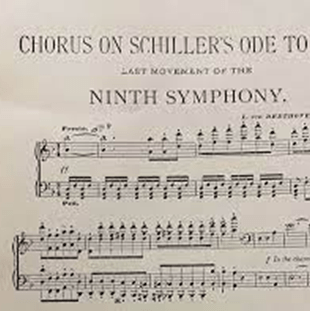
His incomparable Ode to Joy [click to listen] is an ecstatic fusion of presence and possibility. I sang it one memorable evening with the Kodály choir at Oxford: one of the high points of my life.
Across to Paris next, to see one of Auguste Rodin’s most iconic sculptures, The Kiss.
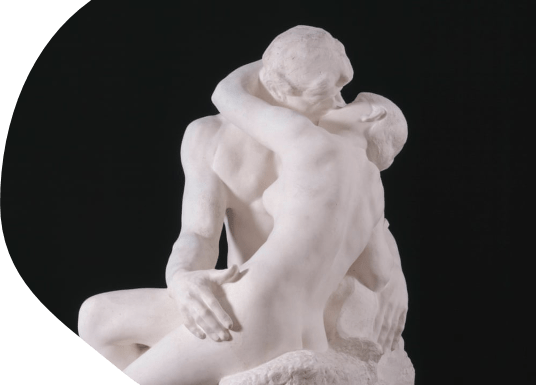
Rodin originally conceived this piece as part of The Gates of Hell but did not include it because the happiness expressed by the lovers was not appropriate to the theme. He encourages us to become immersed in the spiralling rhythms of the entwined bodies and the sensuous finish of smooth limbs against pitted rock. This is surely one of the most joyful sculptures ever created.
Then over to Mexico, and Frida Kahlo’s Viva La Vida, painted just a few months before her death.
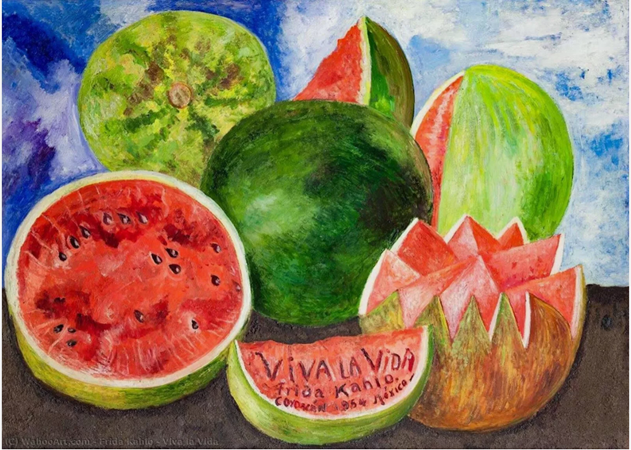
Watermelons, with their juicy red interior and protective green rind represent both the life-affirming joy and the protective armour that she sought throughout her turbulent life. And their many seeds, like those of the pomegranate in Greek mythology, symbolize fertility as well as immortality, carrying the promise of new life forward into eternity.
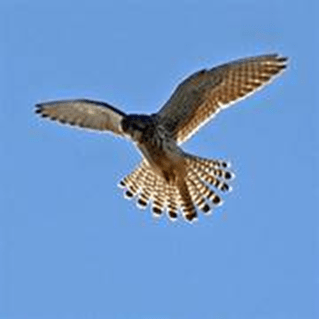
And coming full circle, I offer you the delight of Gerard Manley Hopkins’ The Windhover .
I caught this morning morning’s minion, king-
dom of daylight’s dauphin, dapple-dawn-drawn Falcon, in his riding
Of the rolling level underneath him steady air, and striding
High there, how he rung upon the rein of a wimpling wing
In his ecstasy!
You can listen to the whole sonnet here, read by Julia Watson.
On a clear, sunny spring day, sitting in a garden bursting with wisteria blossom, I find myself effortlessly travelling back in time with Hopkins, leaving my cares behind as I revisit his ecstatic vision in the countryside of north Wales.
We do not need to share Hopkins’ religious convictions to gain profound hope from this sonnet. The beauty and joy of the kestrel, ecstatically riding the wind, infuses with his energy not only Hopkins the poet but also us, his readers. He reminds us to celebrate those moments in our own lives when we feel effortlessly magnificent and free. He inspires us to believe in a glittering luminous core to our own being. A core not suppressed by our daily strivings, but brought by them to the surface, honed and sparkling in the sun. And all this in full awareness that our existence is ephemeral and contingent, that danger and death await us; which knowledge serves only to heighten the intensity of our joy in the present moment.
Thank you for joining me on this roller-coaster of an emotional journey. Please do share your own pieces of artistic joy.

