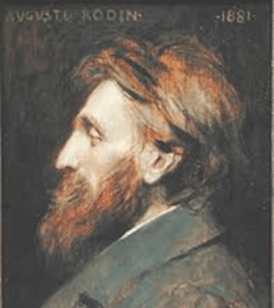
How do we face the prospect of our own death? The French sculptor Auguste Rodin offers us profound insights in The Burghers of Calais.
This sculpture is his memorial to the six men who offered to sacrifice their lives to Edward III of England in return for ending the siege of Calais in 1347.
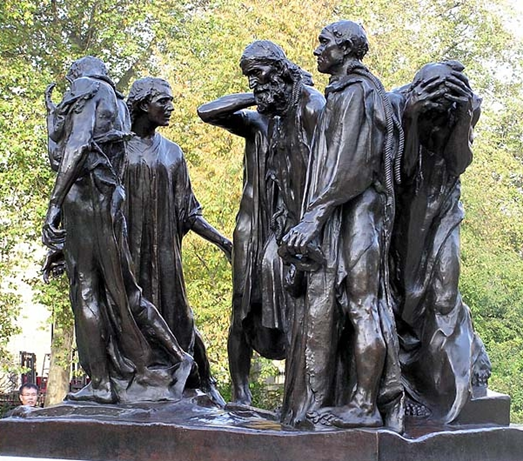
Each reacts differently to his imminent death. Rodin presents us with powerful representations of complex states of sorrow, fear, resignation, rage and disbelief.
For me, these men are a rosary of suffering and sacrifice. They represent our ephemeral existence and inevitable sorrows.They stir memories of personal losses endured and sacrifices made on behalf of others. These bewildering moments are common to humanity throughout time.
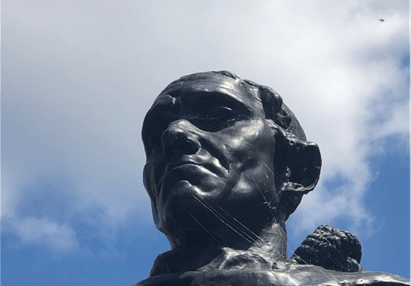
Jean d’Aire was the second burgher to volunteer his life for his city. He was a greatly respected and wealthy citizen, with two beautiful daughters. He displays resolute dignity in the face of despair and imminent death. Head held high, he looks straight ahead with an attitude of defiance. He is portrayed barefoot, dressed in sackcloth with a noose around his neck.
He is the most determined of the six burghers. His feet are planted firmly on the ground, his arms straight, and his torso rigid and motionless. His eyes betray sadness; yet his firmly turned-down mouth and forceful jaw expose an angry strength. The unjustness of his humiliating sacrifice is almost too much to bear, but he is determined to do so.
My patient Stephen is in his 30s. He is a freelance chef. He spent last summer working in a beach-side pizza restaurant on the Greek island of Santorini. Life was good.
But suddenly he finds himself in mortal peril. Stomach pain and tiredness, originally dismissed as food poisoning, turn out to be symptoms of pancreatic cancer. He has looked up the survival statistics and knows they are not good. Surgery and chemotherapy await, followed by a most uncertain future.
I ask Stephen what he is doing to find comfort in his current life. On a recent visit to London, he tells me he spent several hours of intense emotional self-exploration in the company of Rodin’s burghers in Victoria Tower Gardens, next door to the Houses of Parliament. He readily identified with each of them, as he experienced a gamut of emotions much like the burghers: disbelief, fear, sadness, resignation. The prospect of his premature death, so unnecessary, at one point overwhelmed him and he lost control, crying heedlessly in public. But he found himself coming back, again and again, to admire the dignified defiance of Jean d’Aire. Stephen is in tears again during our consultation, but this time his tears are accompanied by a sense of strength.
Jean d’Aire is Stephen’s defining role model. He will stand tall, determined to see it through to the end.

