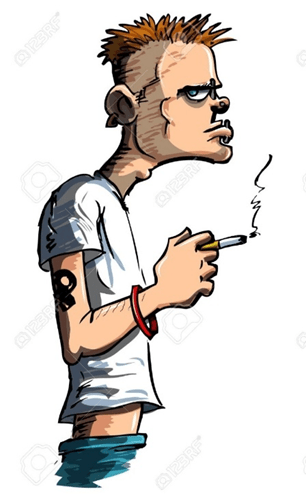
My patient Darren is a very angry young man. He is nineteen, with multiple piercings and visible scars on both his arms. His stories – furious diatribes, littered with expletives – are of being caught up in the ongoing acrimony of parental separation, past experiences of vitriolic verbal attacks by his father, and relentless bullying in school. He has no qualifications, is unemployed, single and lives in a tiny flat on a busy main road. Cutting himself with a razor gives temporary relief from psychic pain. Alcohol numbs his senses but also leads to fights with friends, nightclub doormen and police. His other comfort is beating the hell out of his drum kit in the middle of the night.
And yet. He keeps coming to see me. Behind his angry ranting I hear a lost, lonely, little boy. But I also see a young man with a desire to survive, to persevere in his own being.
Alongside our consultations, two creative artists provide Darren with a sense of release, an embryonic belief in being understood.
Bruce Springsteen’s stormy relationship with his father Douglas strikes a powerful chord with Darren. As a child, Springsteen reports in his autobiography, his abiding memory was ‘the silent, dormant volcano of the old man’s nightly kitchen vigil, the stillness covering a red misting rage’. This impacted his own life. ‘I grew very uncomfortable, very fast, with domestic life. Worse, it uncovered a deep-seated anger in me I was ashamed of but also embraced.’
He expresses his angry ambivalence directly in his 1978 song Adam Raised a Cain: [click to listen]
We were prisoners of love, a love in chains
He was standin’ in the door I was standin’ in the rain
With the same hot blood burning in our veins.
Darren follows the evolution of this testing relationship, through ‘leaving in the morning’ on Independence Day (1979), My Father’s House (1982) ‘where our sins lie unatoned’, and Long Time Coming (2005) when Springsteen can at last ‘bury my old soul and dance on its grave’. He can see the possibility of a similar path for himself.
Darren’s second inspiration is Charles Bukowski (1920-1994) poet, novelist and short story writer, based in Los Angeles. Bukowski addresses the gritty, uncomfortable, ordinary lives of poor Americans. Time magazine described him as a ‘laureate of American lowlife’.
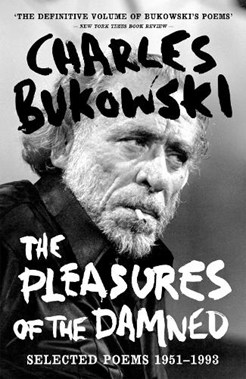
His poem Let It Enfold You strikes many angry chords with Darren:
I was living a hell in
small rooms, I broke
things, smashed things,
walked through glass,
cursed.
But also, persuasively, this poem offers him visions of a different, gentler life:
cautiously, I allowed
myself to feel good
at times.
I found moments of
peace in cheap
rooms
just staring at the
knobs of some
dresser
or listening to the
rain in the
dark.
Click here to listen to Timothy Chalamet reciting the entire poem.
Darren’s rage against the injustices of his life is based on a deep assumption that things should not be as they are. He deserves better. And his life begins to change. He rescues an Alsatian dog who he renames Koda, a Sioux word meaning friend, companion or ally. They become inseparable. He takes a music course at a local college to improve his drumming skills; and through this finds a place with two local bands, one with a possible recording contract. Darren is learning to channel his anger into warrior mode, supporting other members of his family in need.

