Many of us go through periods of loneliness and isolation. For some, these are long-term or even permanent states.
I offer you four artistic pieces. I hope they provide you with a sense of understanding, of connection.
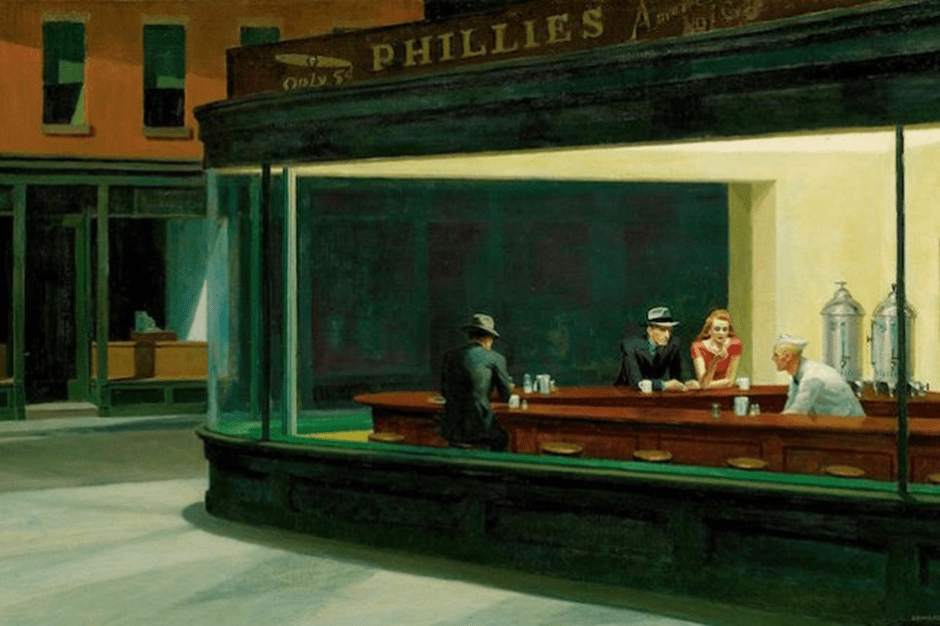
Nighthawks: Edward Hopper (1942). Every time I see this picture, I imagine myself late at night, standing in a dark, deserted city street outside a downtown diner. Do come and join me.
We are looking through the large glass window at four profoundly disconnected figures. The man and woman at the counter sit side by side, physically close but psychologically worlds apart. Their hands don’t touch. She stares at her sandwich. He stares into the distance. Her coffee is steaming, while his sits cold.
The solitary man has his back turned to us, a glass in one hand and a newspaper beneath the other. The waiter stares blankly from the counter. No one looks at each other. No one interacts. Each is completely alone in the world.
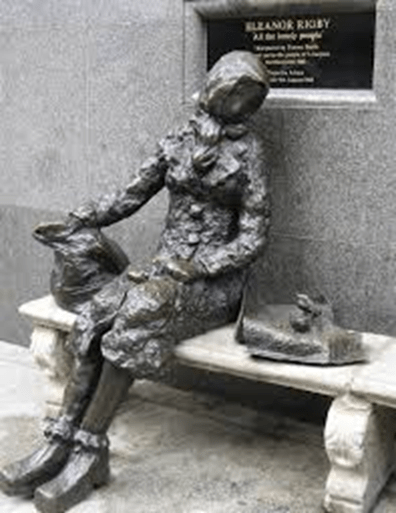
Eleanor Rigby: [click to listen] The Beatles (1966)
Eleanor Rigby picks up the rice in the church where a wedding has been. Lives in a dream. Waits at the window, wearing face that she keeps in a jar by the door. Who is it for?
Father McKenzie writing the words of a sermon that no one will hear. No one comes near. Look at him working, darning his socks in the night when there’s nobody there. What does he care?
Eleanor Rigby died in the church and was buried along with her name. Nobody came. Father McKenzie wiping the dirt from his hands as he walks from the grave. No one was saved.
I lived in Liverpool for many years and often passed by the statue of Eleanor Rigby in Stanley Street. In my own heart, song and statue together ‘elicit enormous compassion for these lost souls’.
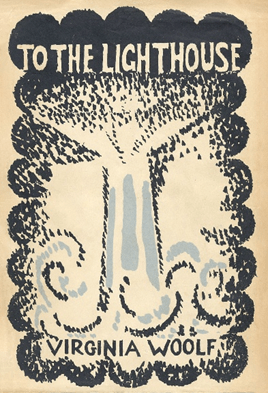
To the Lighthouse: [click to read] Virginia Woolf (1927)
We can be lonely even in the midst of family and friends. This novel centres on the Ramsey family and their visits to the Isle of Skye between 1910 and 1920. It is almost entirely introspective, composed of a series of interior monologues of characters whose needs fail to align.
Virginia Woolf is fully aware of the deficits in human relationships. In her view, human beings are isolated and communication between us is all too often incomplete and disappointing.
Let this Darkness be a Belltower. Rainer Maria Rilke (1922)
Yet we can find strength and meaning even in the darkest and most isolated of places. This is the last of the 55 Sonnets to Orpheus, composed by Rilke in the astonishingly brief period of three weeks in February 1922. It is translated by Joanna Macy and Anita Borrows. Here is Joanna’s reading. [click the link]
For me, the key message is in the final three lines.
Quiet friend who has come so far,
feel how your breathing makes more space around you.
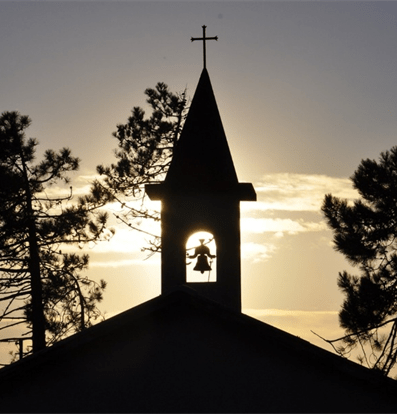
Let this darkness be a bell tower
and you the bell. As you ring,
what batters you becomes your strength.
Move back and forth into the change.
What is it like, such intensity of pain?
If the drink is bitter, turn yourself to wine.
In this uncontainable night,
be the mystery at the crossroads of your senses,
the meaning discovered there.
And if the world has ceased to hear you,
say to the silent earth: I flow.
To the rushing water, speak: I am.

